These Harbour Seals were seen many times along these rocky hills with their babies, but not in large groups. Harbor Seals and Sea Lions are common along the Puget Sound Ocean and often seen in large groups. Aquatic Garter Snakes spend their live in water searching for small fish and baby amphibians for food. Turkey Vultures are common in the PNW in summer weather. They migrate south in the cold weather. Unlike most other birds Turkey Vultures have a sense of smell. And this helps them find dead animals of all kinds that they like to eat. The last one I saw was eating a dead opossum alongside a rode.
There are times while sailing or walking along water you do not see any animals but there are times when you do, and I got lucky the last couple of weeks, so I want to share these photos with you. Thanks to my brother taking me for a trip from Washington Lake to the Puget Sound Ocean I got to see a lot of Harbour Seals in a different way. They are common in Puget Sound but I have normally seen them only when low tides bring up something for them to gather on. Later, while walking along the river in Leavenworth I saw a snake I had not seen in that river before. Garter snakes are seen a lot but usually not swimming in water, but this species, Aquatic Garter Snake, dose live in water. After that my wife and I walked along a trail we do many times. Over and over we have seen bald eagles there along that Puyallup Rive Trail, but this time we saw a Turkey Vulture.
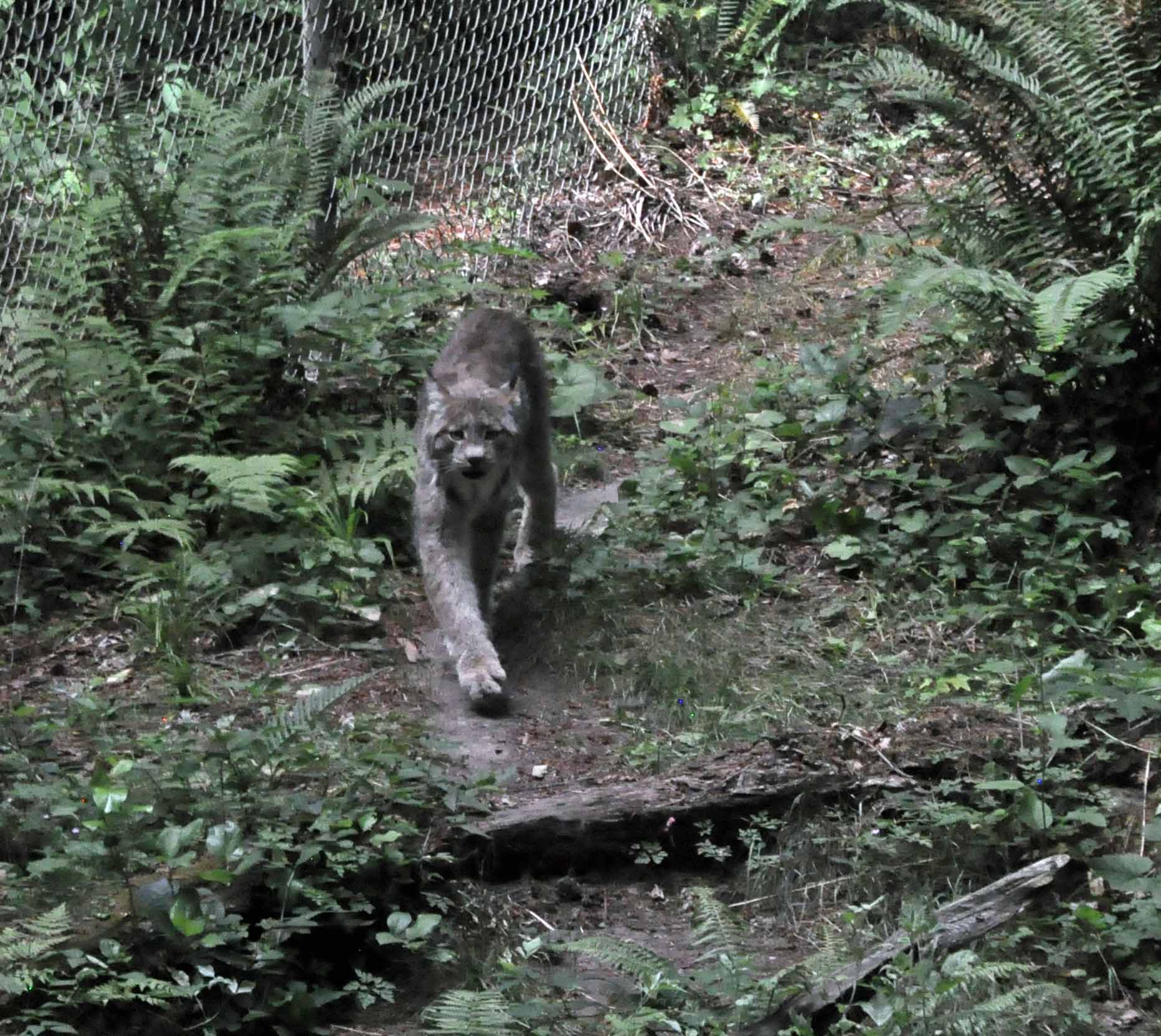
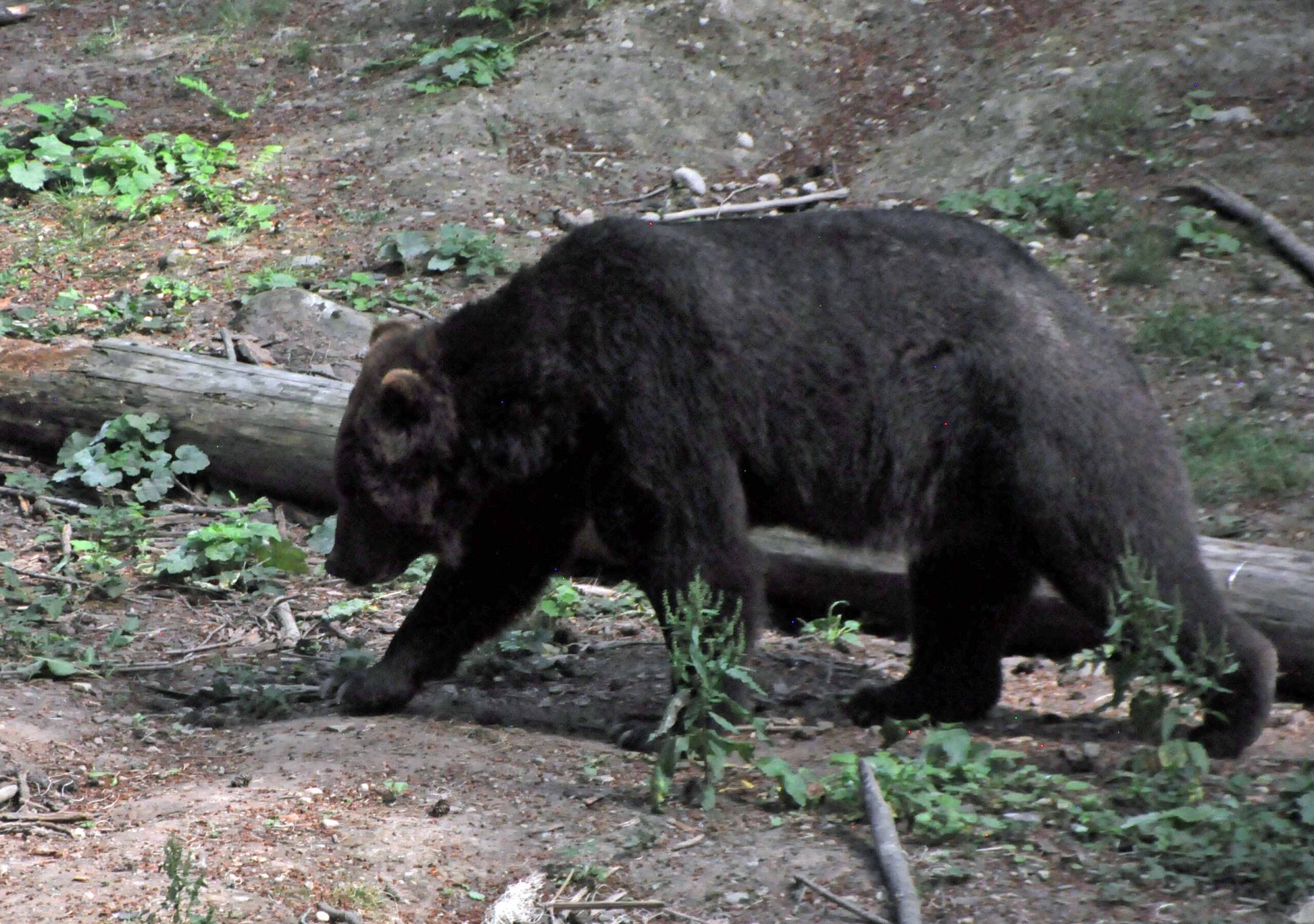
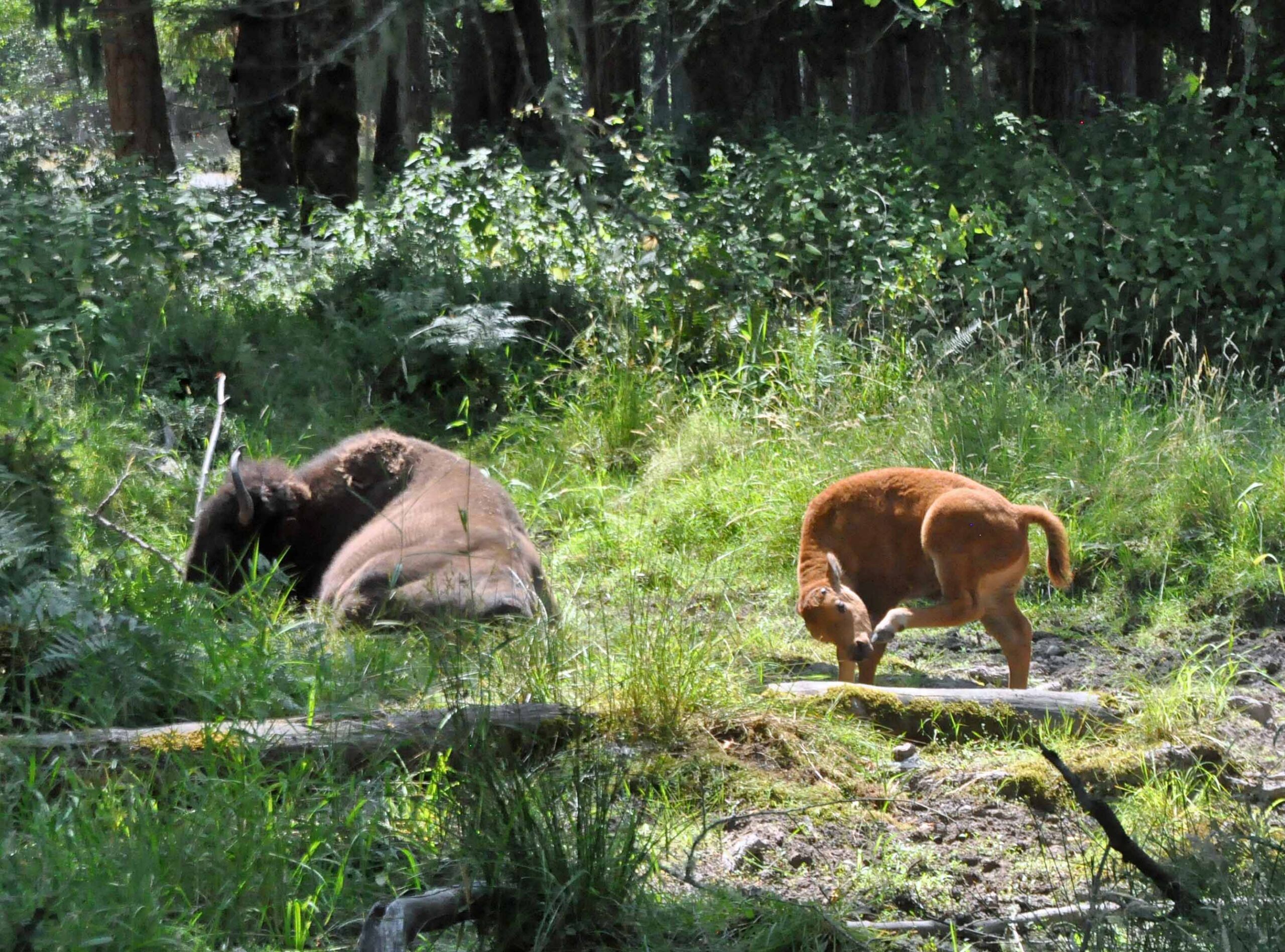
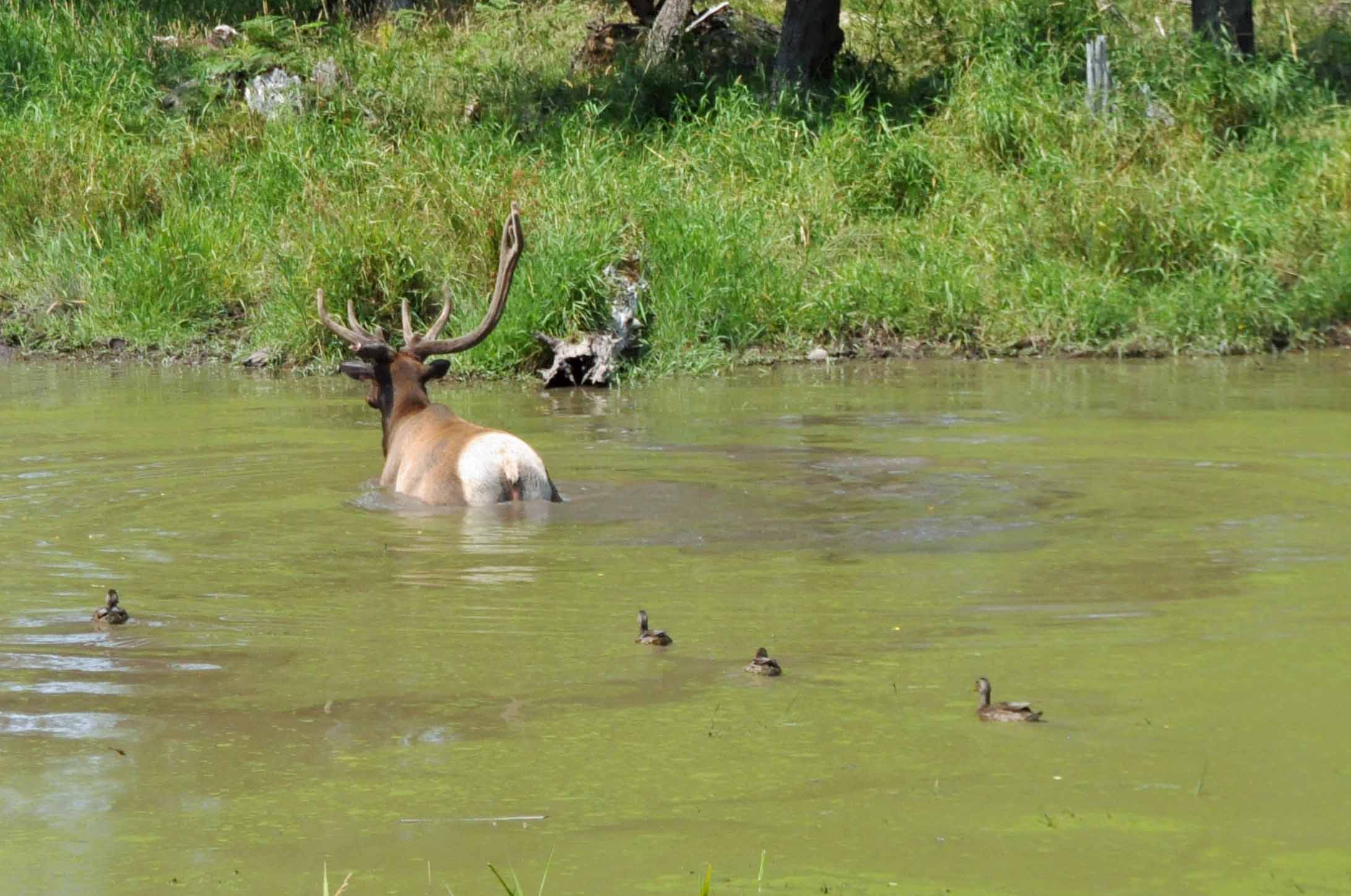
Above is just a small example of the animals you can see at NWTWP. The cougar and the black bear were seen while walking around. The elk and bison popped up during the wildlife tour. The last time I saw a bison was in Oklahoma and this is the first time I saw one with its baby. I’ve seen elk many times here in WA but this is the first time I saw one in a pond.
Again, I recommend you visit Northwest Trek Wildlife Park(NWTWP) in Eatonvile. Once you arrive there are 2 enjoyable ways to view the animals. One is just walking around as you do in other zoos, but it is different at NWTWP. It is a walk somewhat similar to taking a hike on a trail in the wild, and you will see animals very much as you would see them in the wild. There you will see just about all of the NW animals including cougars, bobcats, black bears, coyotes, otters, raccoons, skunks, eagles, owls, and other species. Their enclosure is very large and very good for the animals. Also while walking there is a plase where you can see many NW reptiles and amphibians. The other another way in NWTWP that you and your children will enjoy – the wildlife tour. You can buy a ticket for this tour on the way in. On it while sitting down you see animals just as they live in the wild as the driver speaks detailed information about them. Of course there are native deer and elk, but you can also observe bison, moose, mountain goats, caribous, and bighorn sheep. Thay are in what is called a Free Roming Area and you will see them just as you would out in the wild. This is thanks to 100 acres donated to the NWTWP a few years ago. For more accurate and detailed information about NWTWP animals and ability to buy tickets online go to their website:https://www.nwtrek.org/
Paper Wasp nests are built hanging from something. Here you see one hanging from a tree right now and one I’ve seen many times before – hanging from the top of my deck and the side of my home roof. They start small but get quite large.
There are 3 species of this insect: Golden Paper Wasp, European Paper Wasp. and the Western Paper Wast. All are very black and yellow but there are some differences, especially in Western Paper Wasp body. The one I have seen the most of around my home and property is the European Paper Wasp. This may be the one you see in your property here in WA. Why are they called Paper Wasps? It is because their nest looks like paper. And if you see this nest don’t worry too much about getting close to it. Although they look like Yellow Jacket Wasps, the Paper Wasps are not very aggressive. I got close in order to take pictures and the wasps did not fly out to sting me even when I got close several other times. I’ve had the opposite reaction from Yellow Jackets and some other wasps when I got close to take a picture or even just walked by their nest. Yes, Paper Wasps may sting if you get to close or try to touch them. But just get close to watch them and you will see a lot of activity around their nest. They will also be out going after flowers and some small insects for food.
References to my article:
Pacific NorthWest Insects – Merrill A. Peterson
Field Guide to Insects and Spiders of North America – Arthur Evans
Bugs of Washington and Oregon – John Acorn and Ian Sheldon
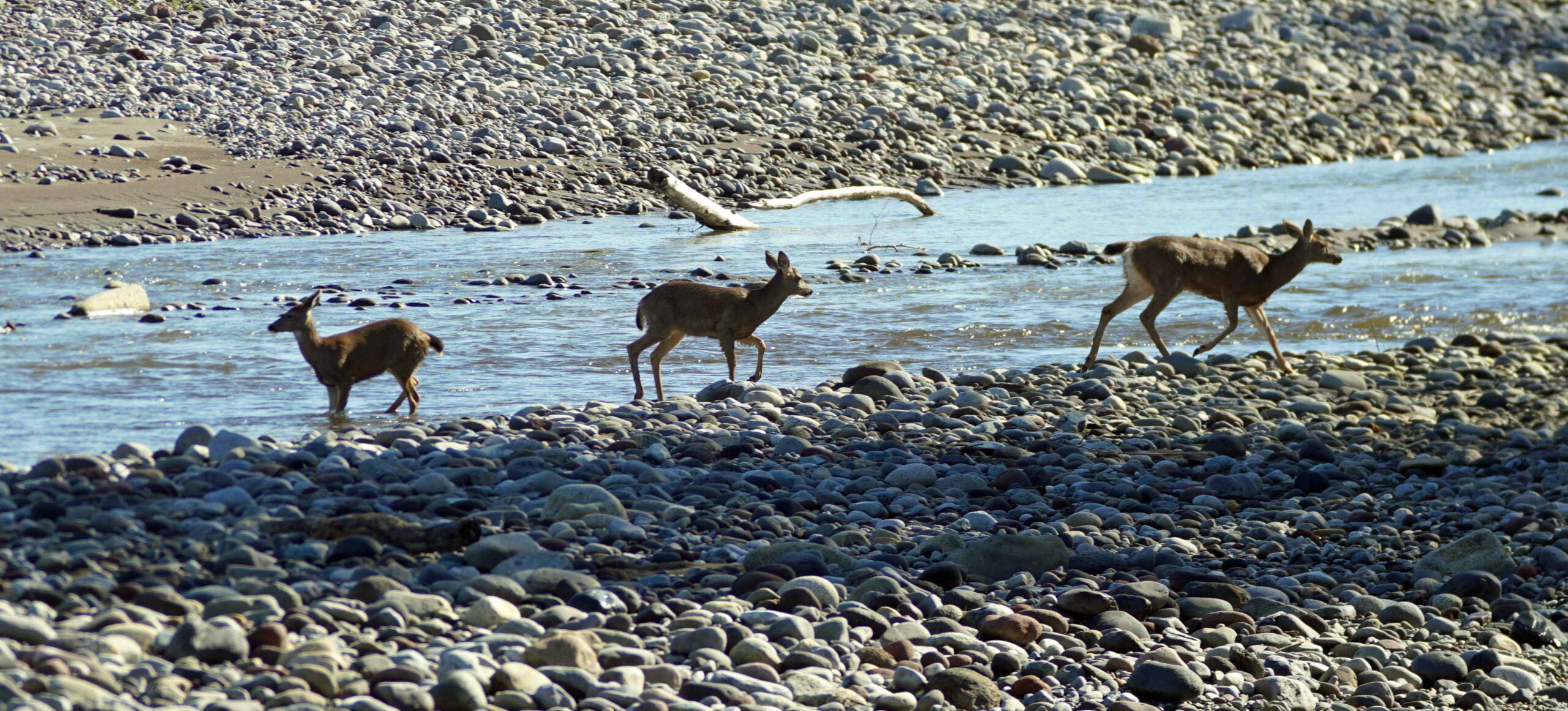
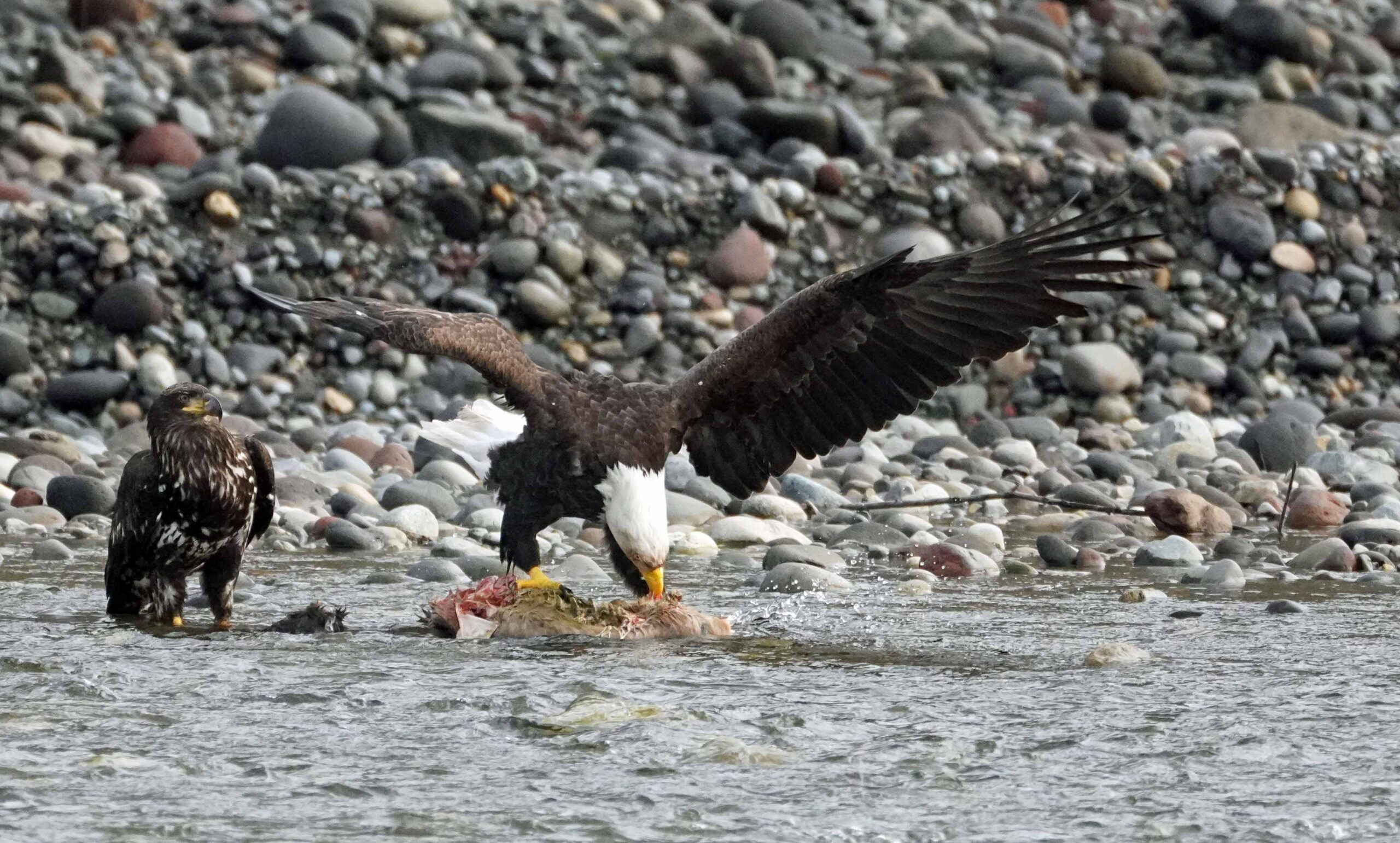
These deer then got upset due to my dog barking and rain over the river to the other side. Normally we see bald eagles in a tree but once along the Puyallup River I saw what appears to be a male bald eagle teaching its chick how to find food. Take a walk along the Puyallup river and you may also see something like this.
I just want to share some photos and make a recommendation for hiking now that the weather has become nice. My wife and I like to walk up and down the Puyallup River Trail in Orting. We also bring our dog with us. This trail is very easy and safe to hike on with a good view of the Puyallup River and other things. You can also bring your dog with you. Many times there you may see bald eagles, white tailed deer, and mallard ducks in the river. On the trees along the trail you will hear and see red winged black birds, stellar jays, chickadees, and robins. You will also hear, but probably not see, pacific tree frogs. Keep walking and you will see some interesting streams and cross a bridge over the Carbon River. And beyond that other streams come up with beaver dams and homes. Keep walking from there and you will find a place to get coffee, sit down and rest.
For aspiring pet care entrepreneurs in northwest communities, pet industry growth is creating real pet care business opportunities for people who want steady work that supports the animals they love. The challenge is that many first-time founders care deeply but feel stuck between passion and practicality, unsure what services fit today’s target audience pet owners or what a trustworthy operation should look like. Starting a pet care business can meet a clear local need while building a base for conservation-minded impact that doesn’t depend on perfect timing or insider connections. The payoff is a business that earns trust, strengthens community care, and funds wildlife protection.
Quick Summary: Launching a Pet Care Business
Choose the pet care services you will offer based on your skills, demand, and capacity.
Set up the startup essentials, including pricing, policies, scheduling, and safety procedures.
Secure the required licenses and certifications to build trust and operate responsibly.
Use clear client acquisition strategies to attract ideal customers and earn referrals.
Market your pet care business with consistent messaging that highlights your values and community impact.
Choose Your Lane: 4 Pet Care Business Models
Pet care can fund conservation work in a way that feels personal, helping animals one client at a time while building a dependable income stream. Use the options below to pick a lane that fits your schedule, comfort level, and how you want to show up for your community.
Start with dog walking services if you want the simplest launch: Build a “starter route” of 3–5 nearby clients before you add anything else. Offer 20–30 minute walks, include a quick check of water and doors, and set clear boundaries for leash behavior and weather policies. This model is low-cost to start and gives you quick reps on the basics from the game plan, pricing, scheduling, safety, and reviews.
Choose pet sitting options if you want higher-value bookings: Decide whether you’re doing drop-ins, overnight stays, or in-home boarding, each has different risk and home rules. Create two packages (basic + premium) and require a meet-and-greet plus written care instructions before accepting a booking. A growing market can support this path: the global pet sitting market size was estimated at USD 2,685.2 million in 2024, so it’s worth building reliable systems early
Build pet grooming businesses only if you’ll commit to training and hygiene systems: Start small with add-on services you can learn safely, nail trims, brushing/deshedding, ear checks, then expand into baths or full grooms as your skills and insurance allow. Write a sanitation checklist (tools, towels, tub, table) and a “stop policy” for stressed or aggressive pets to protect everyone. Grooming can pay well, but it’s physically demanding, price to include cleanup time and wear-and-tear.
Launch an ecommerce pet products store when you can’t trade more hours for more income: Pick one narrow niche (e.g., durable walking gear, enrichment toys, or travel kits) and validate it with 15–20 conversations with local pet parents before buying inventory. Start with small batches, clear photos, and simple shipping rules, and consider a conservation tie-in like donating a set amount per order to habitat restoration or wildlife rehab. The upside is real, American pet owners are anticipated to spend over $150 billion on pet maintenance in 2025, so focus on differentiation, not being “another pet shop.”
Do one-page business planning for pet care before you spend money: Draft five bullets: your service lane, ideal client, 2–3 packages, monthly income goal, and your “non-negotiables” (hours, travel radius, species you won’t handle). Add a simple budget with three lines, startup costs, monthly fixed costs, and per-visit costs, so your pricing and marketing don’t drift. This keeps you aligned with the essentials: safety, legal basics, client acquisition, and repeatable operations.
Use realistic startup funding sources that won’t create pressure: Begin with “client-funded growth” (first deposits pay for supplies), then explore small options like microloans, a low-interest credit union loan, or local small-business grants, especially those tied to community development. If you use a credit card, cap it at a specific amount you can repay within 60–90 days and only for essentials you’d buy anyway. The goal is steady, ethical growth that leaves room for giving back, without financial stress.
Plan → Protect → Outreach → Deliver → Reflect
This workflow turns a caring idea into a dependable routine that serves pets, clients, and northwest wildlife conservation. It keeps you moving in a clear sequence so licensing, outreach, and day-to-day operations do not compete for attention. When you repeat the cycle, you create steady income and a consistent conservation habit that feels doable.
Set a small startup budget and choose low-pressure funding
Supplies covered without financial strain
Protect
Confirm licensing, insurance, policies, and intake forms
Reduced risk and smoother onboarding
Outreach
Run weekly outreach, collect reviews, track inquiries
Reliable lead flow and trust signals
Deliver
Follow checklists, communicate updates, log notes each visit
Consistent care quality and fewer surprises
Reflect
Review finances, adjust marketing, set conservation transfer
Better margins and steady conservation giving
Each stage feeds the next: planning guides spending, protection builds confidence, and outreach fills a schedule you can deliver on. Reflection closes the loop so your marketing strategies and operations improve, while your conservation support stays consistent.
Quick Answers for New Pet Care Entrepreneurs
Q: What are some beginner-friendly pet care services I can start with minimal stress? A: Start with one repeatable offer like 20 to 30 minute drop-in visits, dog walks on set routes, or feeding and litter refresh for cats. Keep add-ons limited until your routine feels easy, then expand slowly. A simple checklist and a short client intake form reduce surprises and protect your schedule.
Q: How do I organize my time and daily tasks to keep a new pet care service running smoothly? A: Time-block three daily anchors: client care, admin, and outreach, even if each block is only 20 minutes. Use one calendar plus one task list, and close each day by confirming tomorrow’s addresses, keys, and pet notes. Store signed agreements and care plans as labeled PDFs so you can search fast and share updates cleanly, and if you’re editing PDF documents, check this outto keep your forms consistent.
Q: What are the essential things I need to know about getting permits or certifications to avoid feeling overwhelmed? A: Make a one-page compliance list: local business registration, pet care insurance, and any required animal handling or first-aid credential in your area. Call your city or county office and ask for the exact steps in order, then file one item per week. Keep every receipt and approval letter as a single merged PDF to stay audit-ready.
Q: How can I market my pet care services without getting stuck or confused by too many options? A: Choose two channels only: referrals and one local visibility option such as community boards or neighborhood groups. Many pet businesses find referrals are the highest-converting channel,so build a simple “ask” into your checkout message. Track inquiries in one spreadsheet so you can double down on what actually brings kind, reliable clients.
Q: What if I want to turn my love for animals into a small side business but don’t know where to begin with the paperwork? A: Start a “paperwork starter pack” folder with three documents: a basic service agreement, a pet profile, and an emergency contact plan. The cat profile sheetformat is a helpful model for capturing routines and medical notes without overthinking it. Draft, tidy, and sign everything as PDFs so you can send, store, and update forms in minutes.
Turn Pet Care Into Community Impact and Conservation Support
Starting a pet care business can feel like a lot, paperwork, pricing, clients, and the worry that good intentions won’t cover real-world costs. A community-focused pet care model, grounded in a research-driven business approach, replaces guesswork with steady decisions and builds trust one clear agreement at a time in today’s supportive business environment. When that foundation is in place, entrepreneurial motivation has somewhere to land, and the pet business growth potential becomes practical rather than abstract. Start small, serve well, and let trust do the marketing. Choose one next action today: finalize a simple intake form and client agreement you can confidently share. This matters because consistent, local care strengthens household routines and keeps conservation support resilient over time.
Grassroots wildlife conservation groups—neighbors rescuing injured animals, restoring a wetland, or organizing habitat cleanups—often start as informal, passion-driven efforts. That’s a strength: fast decisions, high trust, and a lot of heart. It’s also a risk: once money, media attention, and volunteer volume show up, the same informality that fueled momentum can expose people (and wildlife) to preventable harm. If you’re part of a growing conservation effort—or simply support one—this is a map for evolving responsibly: protecting the mission, the animals, the community, and the humans doing the work.
The quick version
Scaling is less about “getting bigger” and more about “getting safer.” The goal is to add structure that prevents burnout, avoids legal and financial messes, and improves animal welfare outcomes. Done well, formalization doesn’t kill the spirit—it keeps the spirit from being crushed under its own success.
The problem nobody posts about
When community support grows, you can suddenly face:
More calls for help than you can handle
More volunteers than you can supervise
More donationsthan your personal bank account should ever receive
More wildlife interactions than your team is trained or permitted to do
More public expectations than your informal setup can meet
The turning point often arrives quietly: a single incident, a disagreement about money, a stressed volunteer making a risky decision around wildlife, or a partner organization asking, “Who exactly are we signing this agreement with?”
A simple ladder of maturity (and the traps at each rung)
This ladder isn’t about “professional” vs. “authentic.” It’s about matching your structure to your real-world footprint.
When “formal” becomes your friend (not your enemy)
At a certain point, conservation groups and wildlife educators need a legal and operational container that matches the reality of their work. Formal organization can help you manage risk, communicate credibility to donors and partners, and set up systems that outlast any one founder. For some mission-driven efforts, forming a limited liability company is one pathway to separating personal and project risk while creating a clearer structure for operations and agreements; if you’re exploring that option, this guide on the basics of forming an LLCcan help you understand the typical steps and considerations.
How to scale without turning into a mess
Name your mission in one sentence. Not your dreams—your scope. (Example: “We restore native pollinator habitat in X county through community planting days and invasive removal.”)
Define your “no.” What you do not do matters: certain wildlife handling, certain species, certain areas, certain hours.
Separate money from people. Use dedicated accounts and transparent tracking. Even tiny organizations deserve clean books.
Create role clarity before you recruit. “Volunteer” is not a job description. Write basic role cards: duties, training needed, who supervises, and what happens when something goes wrong.
Add a feedback loop. After every event, rescue intake, or restoration day: what worked, what didn’t, what changes next time.
Build an ethics checkpoint. If a decision affects wildlife welfare, public safety, or the law, it needs a pause-and-review moment—not a group chat vote at midnight.
A grounded resource worth bookmarking
If your work involves moving animals for conservation—reintroductions, translocations, or any “release somewhere else” plan—don’t wing it. The International Union for Conservation of Nature(IUCN) published guidance designed to apply across conservation translocations, emphasizing justification, design, and risk assessment. Even if you’re a small group, reading a real framework can sharpen your thinking about unintended ecological effects and animal welfare outcomes. It also gives you a shared language when collaborating with agencies, researchers, or established nonprofits.
FAQ
How do we know we’ve outgrown “informal”?
If you’re handling significant donations, signing agreements, working on public land, managing a steady volunteer stream, or interacting with wildlife in ways that carry safety/legal consequences, you’ve likely outgrown informal operations.
Will adding structure scare away volunteers?
Usually the opposite—good volunteers stay longer when expectations are clear, training exists, and conflicts are handled fairly.
What’s the biggest mission-drift trigger?
Funding that subtly reshapes priorities. A written scope and a public “what we do / don’t do” statement help you accept support without losing direction.
Do we need to be experts to be ethical?
You don’t need to know everything, but you do need to know your limits—and have a referral network when something exceeds your scope.
Conclusion
Growth in grassroots conservation isn’t a victory lap—it’s a responsibility upgrade. The moment you have more visibility, you’re shaping not only ecosystems, but public behavior and trust. The best scaling moves are boring on purpose: policies, roles, logs, boundaries, and transparency. They protect wildlife, protect people, and keep the mission alive long enough to matter.
How Life Changes Affect Pets and Ways to Help Them Feel Secure
by Rebecca Moore
For Pacific Northwest pet owners, busy families, renters moving between towns, and outdoor-minded folks balancing work and trail time, household transitions can land harder on animals than expected. Common pet stressors like moving to a new home, a new baby, a new partner, travel, illness, or a changing work schedule can cause pet routine disruption that quietly erodes the emotional well-being of pets. The hard part is that life changes affecting pets often look “normal” to humans, while a dog or cat experiences them as a sudden loss of predictability. Naming that tension helps households respond with steadier expectations and more peace at home.
Understanding Pet Stress Signals
Pets handle change through patterns, not explanations. When routines shift, stress often shows up as small behavior changes rather than obvious fear, because your dog or cat is trying to regain predictability.
That is why a move, a new roommate, or a new work schedule can feel unsettling even when everyone is safe and kind. Stress signals are often easy to miss, like hiding, increased vocalization, or unexpected aggression, because they can look like “attitude” instead of discomfort.
Think about how a shy shorebird reacts when foot traffic increases on a familiar beach. The habitat is still there, but the rhythm changed, so the bird becomes quieter, more watchful, and quicker to retreat.
With that lens, comfort strategies become clearer: rebuild routine, add safety cues, and transition gradually.
Build a Calming Plan: 7 Comfort Moves That Actually Help
When your pet’s stress signals start showing up, hiding, pacing, extra clinginess, or sudden “accidents”, a small, steady plan can do more than reassurance in the moment. These comfort moves focus on predictability, safe choices, and gradual transition techniques that ease pet anxiety without needing perfection.
Anchor the day with two “always” routines: Pick two things you can keep consistent even during chaos, usually breakfast and a short evening walk or play session. Keep the order the same (potty → food → quiet time), because sequence is a security cue. If your schedule is shifting, shorten the routine but don’t delete it; a 5-minute sniff walk still counts.
Create a true decompression zone: Set up a spot your pet can retreat to without being followed, filmed, or bothered, especially by kids or visitors. A comfortable bed or crate in a quiet area works best with one rule: nobody interacts with them there unless invited. Add a worn T-shirt that smells like you and keep lighting low to help the nervous system downshift.
Use one simple “safety signal” phrase: Choose a short phrase like “All done” or “Settle,” say it calmly, then deliver the same thing every time (a treat placed on the floor, a chew, or a scatter of kibble in a mat). Over a week or two, that phrase becomes a reliable signal that the environment is safe. This is especially useful when you spot early stress signals like lip-licking, yawning, or leaving the room.
Practice micro-absences before real alone time: Instead of jumping from “someone’s home” to “four hours alone,” rehearse 30 seconds → 2 minutes → 5 minutes → 10 minutes over several days. Pair each exit with a predictable enrichment item, then return quietly, no big greetings that make departures feel dramatic. If your pet panics at any step, drop back to the last easy duration and build again.
Let them choose distance and direction on walks: Stress often looks like pulling, freezing, or scanning, so make the act of walking more about decompression than mileage. For 10 minutes, follow your dog’s nose and let them pick the route when safe; sniffing is self-soothing and gives them a sense of control. For cats, offer a window perch and a short play “hunt” session at the same time daily.
Change the environment in “tiny doses”: If you’re moving furniture, bringing in baby gear, or setting up a new roommate’s stuff, do it in small batches. Introduce one item, let your pet investigate, reward calm curiosity, then add the next item tomorrow. This gradual transition technique prevents the “everything changed overnight” feeling that often triggers stress behaviors.
Add a security backstop for the “what if” moments: During life changes, doors get left ajar and routines get looser, so tighten identification and containment. Many owners choose microchipping because it’s a permanent form of identification and can support reuniting lost pets if the unexpected happens. Pair that with a quick check that tags are readable and harnesses/collars fit comfortably.
If you try only one thing this week, choose consistency over intensity, short, repeatable rituals and a respected safe space are powerful owner support for pets. Once your calming plan is in place, it’s easier to adapt it to real-life schedule changes without losing the feeling of safety you’ve built
Common Questions When Life Changes Shake Up Pet Security
Q: How can moving to a new home impact my pet’s behavior and emotional well-being? A: A new home can feel like a new ecosystem, so your pet may hide, vocalize, cling, or have accidents while they re-map what’s safe. Keep feeding, potty breaks, and rest times as consistent as possible, and set up one quiet “base camp” room first. Let exploration happen slowly, rewarding calm curiosity.
Q: What are the best ways to maintain my pet’s routine when my work schedule changes unexpectedly? A: Pick two non-negotiables you can protect daily, like a predictable meal window and a short decompression walk or play. Use phone reminders and pre-portion food so stressed humans do not drift into extra snacks since 52 percent of dogs and 56 percent of cats were overweight in 2020. If days get longer, add a puzzle feeder or scent game to make alone time easier.
Q: How might welcoming a new baby affect the dynamics at home for my pets, and how can I help them adjust? A: Your pet may feel their role change overnight, which can show up as attention-seeking or avoidance. Practice baby-like sounds and new routines ahead of time, and pair them with treats or play so the change predicts good things. Keep a pet-only retreat space, and protect it from visitors and busy hands.
Q: What strategies can I use to reduce my pet’s stress during major household transitions? A: Think “small exposures,” not big leaps: introduce one new object, scent, or room at a time, then pause. Offer choice, like a clear exit route from greetings, and keep exercise low-pressure and sniff-friendly. If stress escalates, ask your veterinarian about behavior support early rather than waiting.
Q: If I'm feeling overwhelmed by multiple life changes impacting my pet’s care, what resources can help me find balance and support? A: Start by writing your caregiving limits for the next month: time, energy, money, and what must stay consistent. Then ask for shared help from your household or community, such as rotating walks or check-ins, and schedule a vet consultation if behavior shifts feel scary. If work and training choices are part of the overwhelm, a flexible online study or career-path tool, including healthcare operations and management degrees, can help you map options without sacrificing your pet’s stability
Secure-Home Checklist for Big Life Changes
This checklist turns stressful transitions into simple, field-ready steps. If you love northwest wildlife and local ecology, think of it like habitat stewardship at home: predictable resources, safe cover, and gentle observation.
✔ Set a fixed meal window and refill water at the same times
✔ Create a quiet retreat spot with bed, cover, and familiar scent
✔ Schedule two daily connection breaks for play, sniffing, or brushing
✔ Introduce one new change per day and pair it with treats
✔ Track sleep, appetite, potty habits, and clinginess for seven days
✔ Limit loud greetings and give your pet an easy exit path
✔ Confirm enrichment options are ready before longer alone-time blocks
Small, steady care builds security fast.
Build Pet Security Through Mindful Care and Steady Routines
Big life changes can make a secure home feel unfamiliar to a pet, even when intentions are loving. When mindful pet care and empathy in pet ownership guide decisions, the focus shifts from “fixing behavior” to offering support during life changes with steady cues and calm presence. Over time, that consistency protects long-term pet well-being and strengthens the owner-pet bond, even as schedules, spaces, or households shift. When life changes, be the steady thing your pet can count on. Choose one commitment to pet health today, keep a routine anchor, and watch for small signals that say they need extra comfort. That steadiness builds resilience, trust, and a healthier life together.
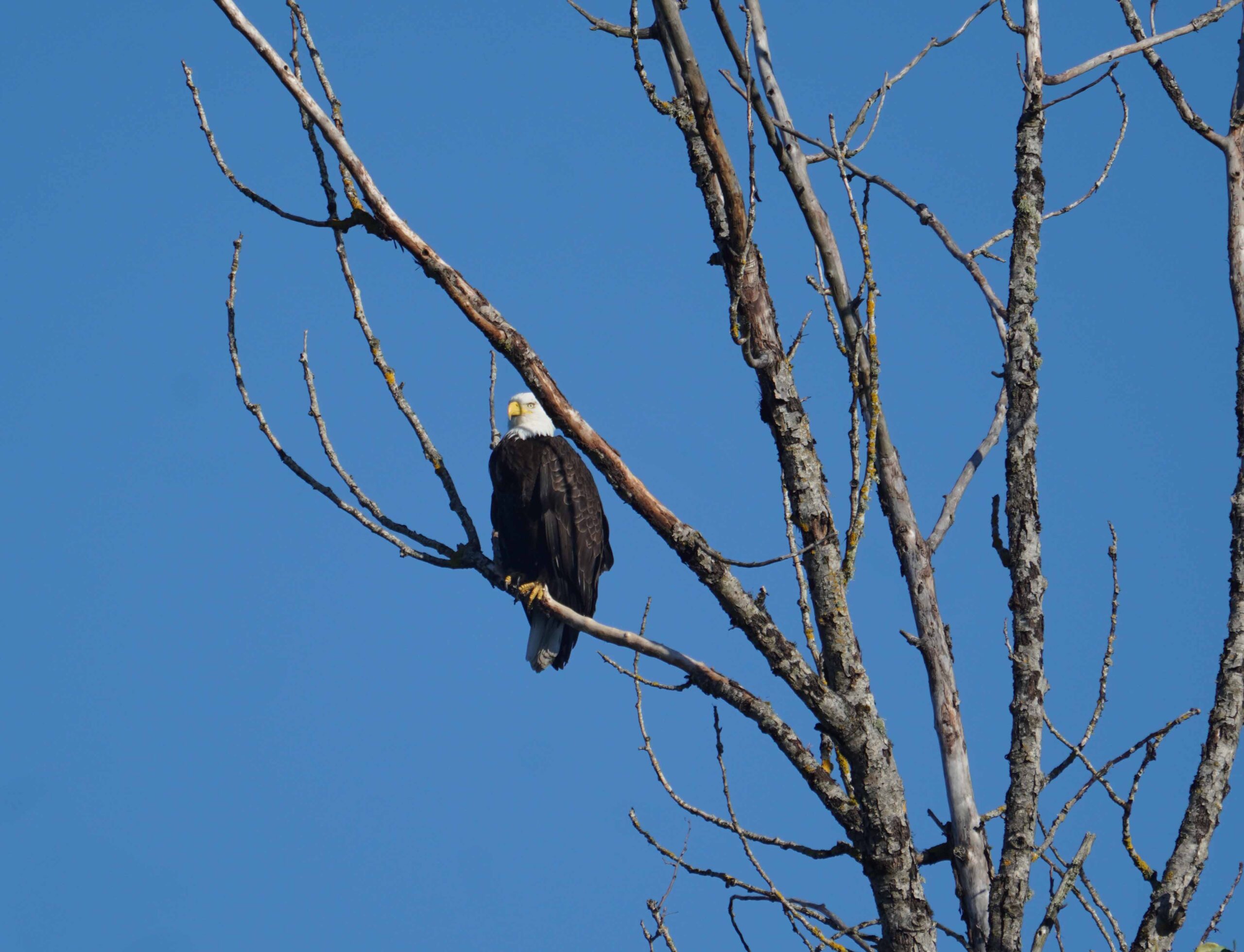
Here are the birds I see summer and winter. I see a surprising number of Redwing Black Birds along the Puyallup River. Also along the Puyallup River are Bald Eagles, but the picture you are seeing here was taken in Alaska. Stellar Jays and Dark Eyed Juncos are in my back yard a lot and they love the bird feeder. And Anna’s Hummingbirds love the flowers and feeders we keep full all year long.
There are quite a few birds that do not always migrate but here a few of them that you will likely see all winter long here in the NW. Why do they not migrate like other birds? Because they can adapt to cold weather and still find food. How do they do it? Birds have feat made of bones and tendons, with very little muscle so they can warm them up easily. Some eat more and gain wait before cold weather strikes in, but can still find food in winter, a lot from wonderful bird feeders. Some have extra feathers in the winter and some are able to fluff up their feathers. Some stay together in large groups to stay warm. The little Anna’s Humming Bird has a unique cold weather adaptation. They do a different kind of hibernation called torpor. In chilly weather they settle in trees and their body temp can go from 100 to 50 as they sleep and the metabolic rate also goes way down. But every now and they wake up and go out to find food and everything goes back up until they torpor again. Thankfully a lot of us now help them with a hummingbird feeder.
Here is the cover of the book I recommend and a couple of my pets. Although my cat Henry looks pissed off all the time, he is actually happy to react with me and my dog. Here they are resting together out on the deck. From here they can both go out into our property during the day.
If you have one or more cats in your home this book “Indoor Cat” is very informative about ways to make their life better and happier. Written by a National Geographic author, Laura J. Moss, and veterinarian Lynn Bahr, it is easy to read and filled with photographs that display the recommendations for your kitties. I’m sure you can find this on Amazon or in a book store, but I got it at a library. Very much addressed is the disadvantage of keeping your cat completely inside thinking that only food makes it happy. The purpose of the book is not just to keep them out forever, but how to help them in and out safely, and other ways to get your pet healthy and excited about things while they are inside. And there are also methods about how to keep your home clean and undamaged from your cats. I strongly recommend reading this book for anyone interested in cats as pets. I have one cat. 11 years old now, Henry is still very healthy and spends a lot of his time safely outside. This is due to our home and property design, the cat friendly dog we have, and the personality of Henry. Prior to this we lost a couple of cats, probably to coyotes. Back then I allowed cats to stay out all night. That was wrong. To avoid this Henry is only fed a full meal inside about 7 pm and then kept inside all night. He gets treats during the day but since he knows the big dinner comes later he comes in right away. This after a last walk on our property with our very large dog, a Great Pyrenees, who gets along with Henry very much. Therefore, my bottom line recommendation to keep your cat save while outside is to have good fence around your property and a dog that defends, and do not leave them out at night. Your cat will learn when to come in depending on when it gets fed.
Here is an example of a few introduced animals in the NW that I like to observe. It is amazing how many bull frogs can be seen and heard in ponds and streams. But they sometimes disappear and the native frog species come back. Bull frogs were brought here years ago as pets. Red eared sliding turtles, named for their red mark and ability to slide up and down on things, were also released as pets and they since dominated our native turtle. These frogs and turtles came to the NW from other states in the US. Here are a couple of animals from other countries: Nutrias are very similar to beavers and live in the same type of habitat. Nutria came from South America and were first brought to Alabama for their feathers many years ago but then were brought to WA in 1930 for the same reason. In the photo above you see a mom with her kits. I see many bull frogs and red eared sliders here in WA, but the most nutria I see are in Oregon. Then one day in Oregon, also at at the Ankeny Wildlife Refuge, I was surprised to see what I believe is an African clawed frog. This frog was also came to our country as a pet in pet stores.
As I have written and said many time before – there are no invasive species – they are introduced species. These animals and plants did not sneak in here by themselves, humans brought them in on purpose or by accident. A surprising huge number of them have come from Europe way over a hundred years ago, and many more from other countries. Some native American species, however, have been introduced from one state to another in our own country, and they are also mistakenly called invasive. Yes, some introduced species do cause damage, but there are some that have been a benefit to us. The most beneficial one I recognize is the honey bee brought in from Europe many years ago. This European honey bee is known here as the Western honey bee. And of course there are a huge number of other introduced insects in the country right know right now. Some of them, like the Japanese beetle are considered dangerous here in the NW, and one of them is a stink bug specie. Europe also brought in many birds: European starlings, House sparrows, and Rock pigeons are the ones here in the NW. As you probably know we do not have nearly as many as the introduced species as there are in Florida, and the species here are not terribly dangerous or destructible. But we do have a lot of introduced animals and plants. I will find more and post pictures.
For comments or corrections on this I would like to hear from you, so please email to reganjm@northwestwildlifeonline.com